

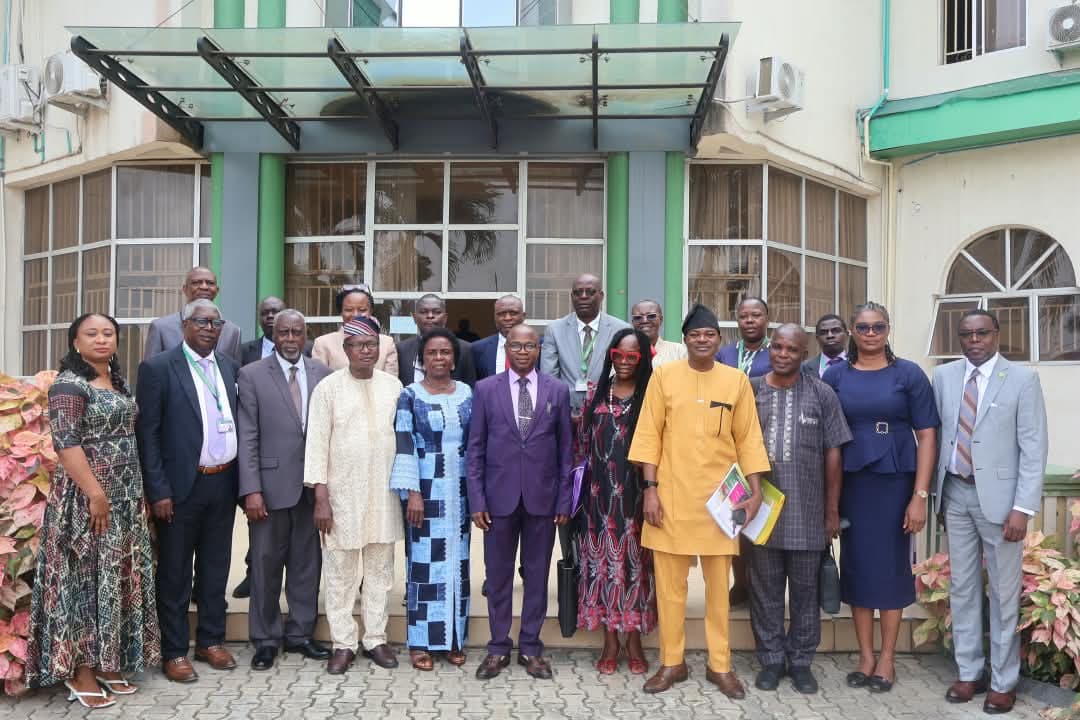
Mountain Top University (MTU) has received commendation from two visiting teams of the National Universities Commission (NUC) for its impressive infrastructural development, well-maintained academic facilities, and exceptionally clean and conducive learning environment during a two-day resource verification exercise for the Medical Laboratory Science and Biomedical Technology programmes.
The resource verification exercises, which were conducted on Monday, 2 November, and Tuesday, 3 November 2026, provided the visiting teams with an opportunity to undertake comprehensive assessments of the University's available academic and infrastructural resources, evaluate the adequacy of its facilities, and ascertain their suitability for the effective continuation and delivery of the two programmes in accordance with the regulatory standards and quality assurance requirements of the National Universities Commission.
The team responsible for the resource verification of Medical Laboratory Science comprised Professor Babatunde Adejumo, Professor Nkeiruka Azubike, and Mrs Grace Alegbeleye. Meanwhile, the team assigned to assess the resources for Biomedical Technology comprised Professor Ngozi Ihediohanma of the Federal University of Technology, Owerri (FUTO); Professor Olufemi Aramid of the Federal University of Technology, Akure (FUTA); and Mrs Stella Benson of the National Universities Commission, Abuja.
The Vice-Chancellor of Mountain Top University, Distinguished Professor Elijah Ayolabi, warmly received the visiting teams in the early hours of Monday, 2 November 2026, ahead of the commencement of the verification exercises. The reception provided an opportunity for the University's management to formally welcome the assessors and acquaint them with the institution's vision, philosophy, and commitment to delivering quality university education.
In his welcome remarks, Professor Ayolabi introduced Mountain Top University as a faith-based institution with a distinctive commitment to holistic human development, academic excellence, moral values, and the overall transformation of its students.
The Vice-Chancellor also highlighted some of the University's international partnerships and strategic collaborative engagements, explaining their contributions to strengthening research activities. He further reiterated the institution's determination to sustain an enabling environment where teaching, learning, innovation, and research can thrive.
Throughout the two-day exercise, the respective NUC teams independently conducted detailed assessments of the facilities and resources available for their assigned programmes. Their evaluations involved physical inspections and examinations of relevant academic infrastructure, laboratory facilities, teaching and learning resources, library provisions, safety arrangements, and the general state of the University's environment.
At the conclusion of their respective assessments, the teams separately presented their observations and preliminary findings to the Vice-Chancellor. In their assessments, they expressed satisfaction with several aspects of the University's institutional development, particularly its impressive infrastructure, the quality and state of its facilities, and the cleanliness and general organisation of the university environment.
The visiting teams also acknowledged that the curricula developed for the programmes were in alignment with the standards prescribed by the National Universities Commission. They further commended the adequacy of the University's library resources and observed that the safety measures and arrangements within the institution were satisfactory.
Notwithstanding the positive observations, the teams identified a few areas requiring further attention and improvement, and their recommendations were communicated to the University Management.
In his response, Professor Ayolabi expressed appreciation to the visiting teams for their professionalism, constructive observations, and valuable recommendations. He assured them that the University management would painstakingly review all the areas identified for improvement and take appropriate measures to address the observations in the University's continued pursuit of academic and institutional excellence.